This month, we'll begin introducing the picture books kept in the lounge— sharing books across different themes, why we chose them, and which ages they suit, for those of you who love picture books too 😊
1 / 5
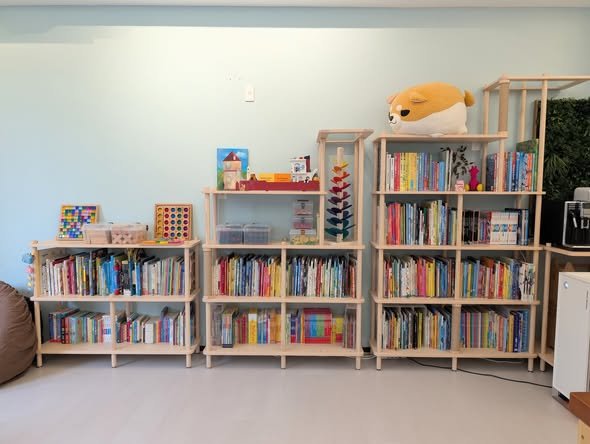
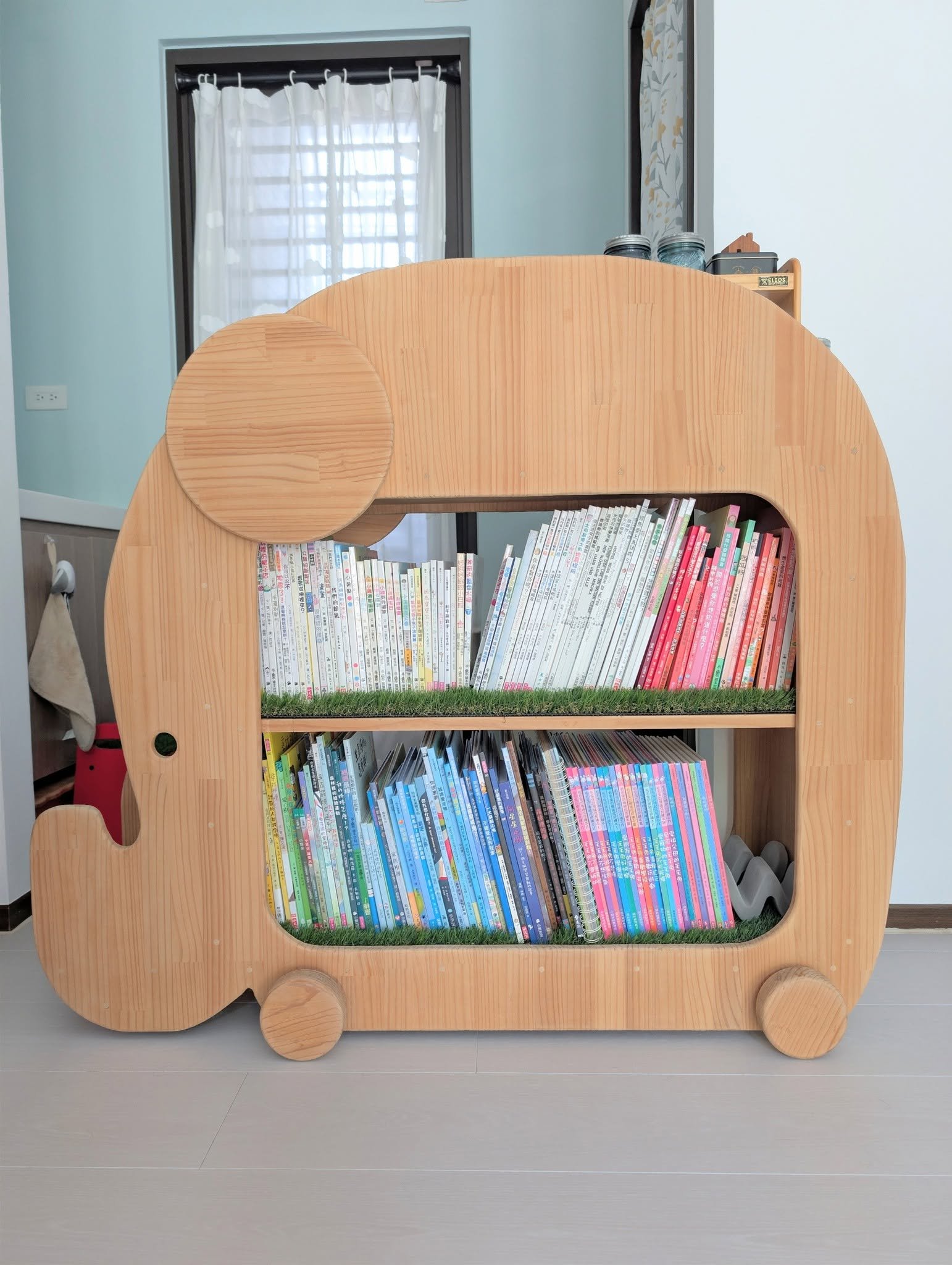
The books here are mostly in English; the Chinese ones are fewer by comparison (though all are favourites we've chosen with care). They're arranged step by step with a child's age, shelved in ascending tiers, then divided by theme— so children of each stage can reach, directly, the books that belong to their stage, and grown-ups can find suitable content at a glance, by age or by language level. We shelve them by a rainbow order, so that putting a book back—or finding it next time— lets grown-up and child alike remember its place easily, for a more at-ease reading each visit.
2 / 5
Some parents worry whether their own English is good enough to read English picture books with their child. There's really no need to worry at all 🙂 A picture book is very different from a book of pure text: the pictures are themselves a way of speaking across language— their style, design, colour, even shape, are all a means of expression that crosses language's borders directly. In the world of picture books, even the words are part of the drawn whole; the feeling of each page, its mood, its tiny details, are all part of the complete reading. Where a text-only book must carry its meaning wholly through description, the words in a picture book are more of a help—the reader doesn't fully need them, and can feel and receive what the author means through the images. So when we read picture books, we always suggest beginning with the pictures themselves, without going straight to the words 🙂 And if you're reading with a child, children—so rich in their senses— can read far more from the pictures than we, looking only at the words, would ever notice. Images first (looking, and listening), then the words—it actually completes a child's understanding more fully. The picture-reading and imagination built along the way, the talking-about of images, all strengthen the development of a child's language 🙂
3 / 5
Sometimes, after looking at the pictures, the story a child believes in may not be the one the author's words describe—and that's perfectly fine. It shows, precisely, that the child can tell a story from pictures— can string thought together through images, and then describe and express it. We needn't tell a child, "No, no—that's not how the story goes." We can, instead, listen to their version with appreciation and curiosity, seeing the small world inside them through their understanding, discovering new lands together. If the child's grasp is ready, we can go on to introduce what the author meant to say (through the words); for older children, that's a way of nurturing the ability to hold multiple points of view.
4 / 5
Open the theme of picture books and there's far too much to finish saying ☺️ We hope, and warmly welcome you, to come sit in the lounge when you're free— to read a little, and talk a little, about picture books together 🌿