2026.06.05
我喜歡自己的遊戲!
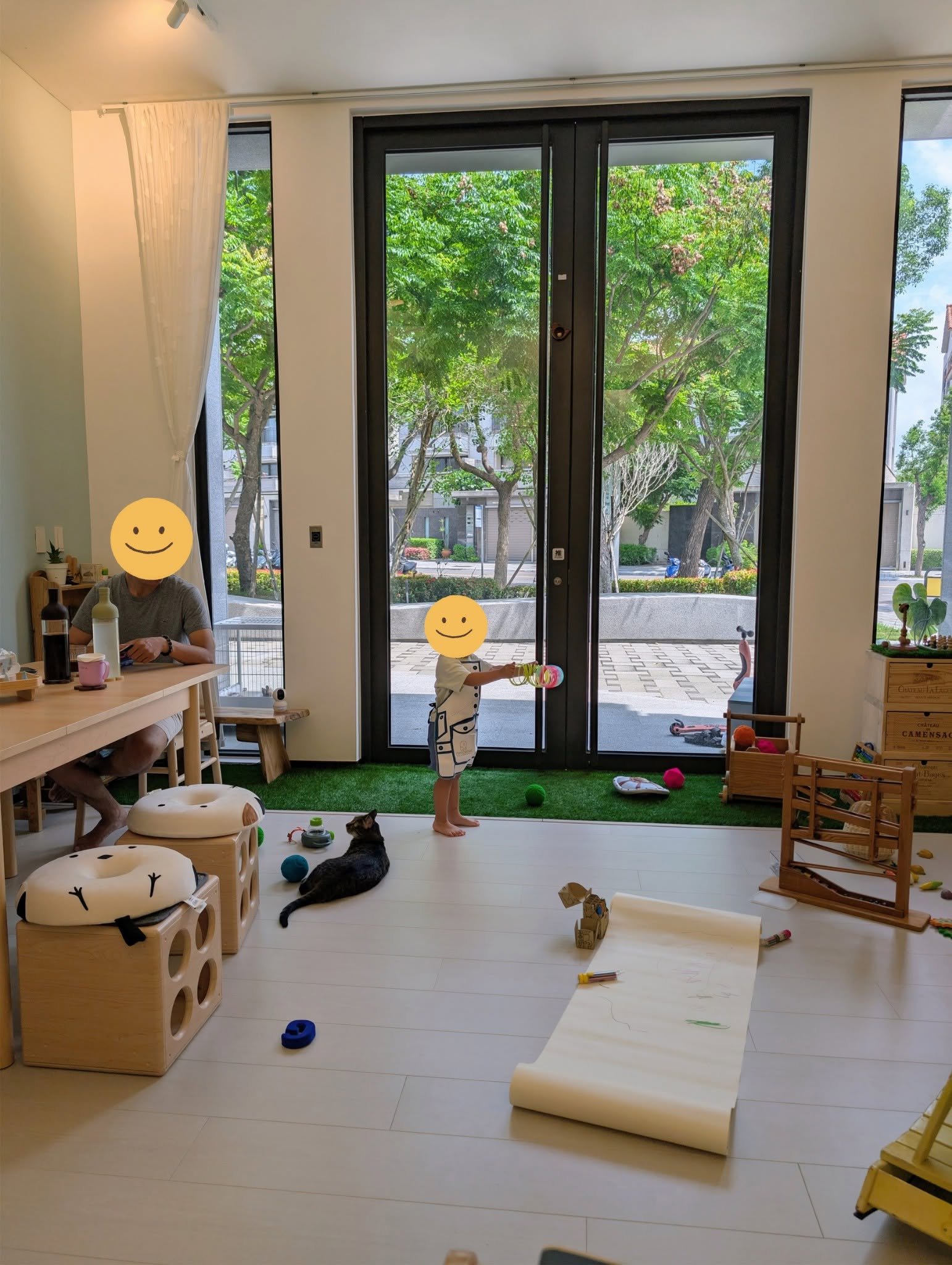
這些時間,來訪的孩子都各有自己的遊戲風格,投入遊戲的時候也很專心,但大多數仍屬於在遊戲過程中,需要一定程度互動陪伴的類型。
這次來訪的孩子,是屬於喜歡“獨立遊戲(Independent Play)”類型的孩子。
孩子心裡在遊戲前已經有清楚的方向,觀察力也很好,她知道自己想玩什麼、想做什麼,腦袋已經有想法與內容,只等待著被滿足。
身為大人的我們,其實只需要在旁邊單純陪伴,存在感不用很高😂。
1 / 5這些時間,來訪的孩子都各有自己的遊戲風格,投入遊戲的時候也很專心,但大多數仍屬於在遊戲過程中,需要一定程度互動陪伴的類型。
這次來訪的孩子,是屬於喜歡“獨立遊戲(Independent Play)”類型的孩子。
孩子心裡在遊戲前已經有清楚的方向,觀察力也很好,她知道自己想玩什麼、想做什麼,腦袋已經有想法與內容,只等待著被滿足。
身為大人的我們,其實只需要在旁邊單純陪伴,存在感不用很高😂。
1 / 5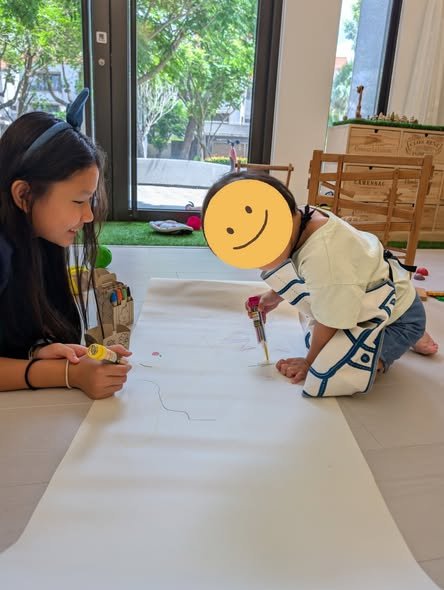
她從一開始,就很專注的在發展自己想玩的,不需要被引導(或干擾)。
如果想要介紹她什麼玩具,或引導她試試不同的玩法
都需要努力找到她注意力的空隙,
然後想辦法“自然的”把自己擠進去個三秒🙋
這個小女孩,也是第一個完整的使用了整個空間來遊戲的孩子。隨著來訪的次數增加,她也越泰然自若的盡情「發揮」道具跟場地。
如果只從場景的表面來看,可能會覺得孩子只是把一堆玩具隨機拿出來玩,撒的很亂,隨性而沒有內容,一個換過一個。
事實上,因為孩子在遊戲過程中“動態”展現出的內容,常常是需要一路持續觀察著,才有機會捕捉。
如果沒有機會跟著孩子的動態一直觀察,可能不容易串連孩子行動裡的真實內容,而只看到一堆一堆的玩具散落。
2 / 5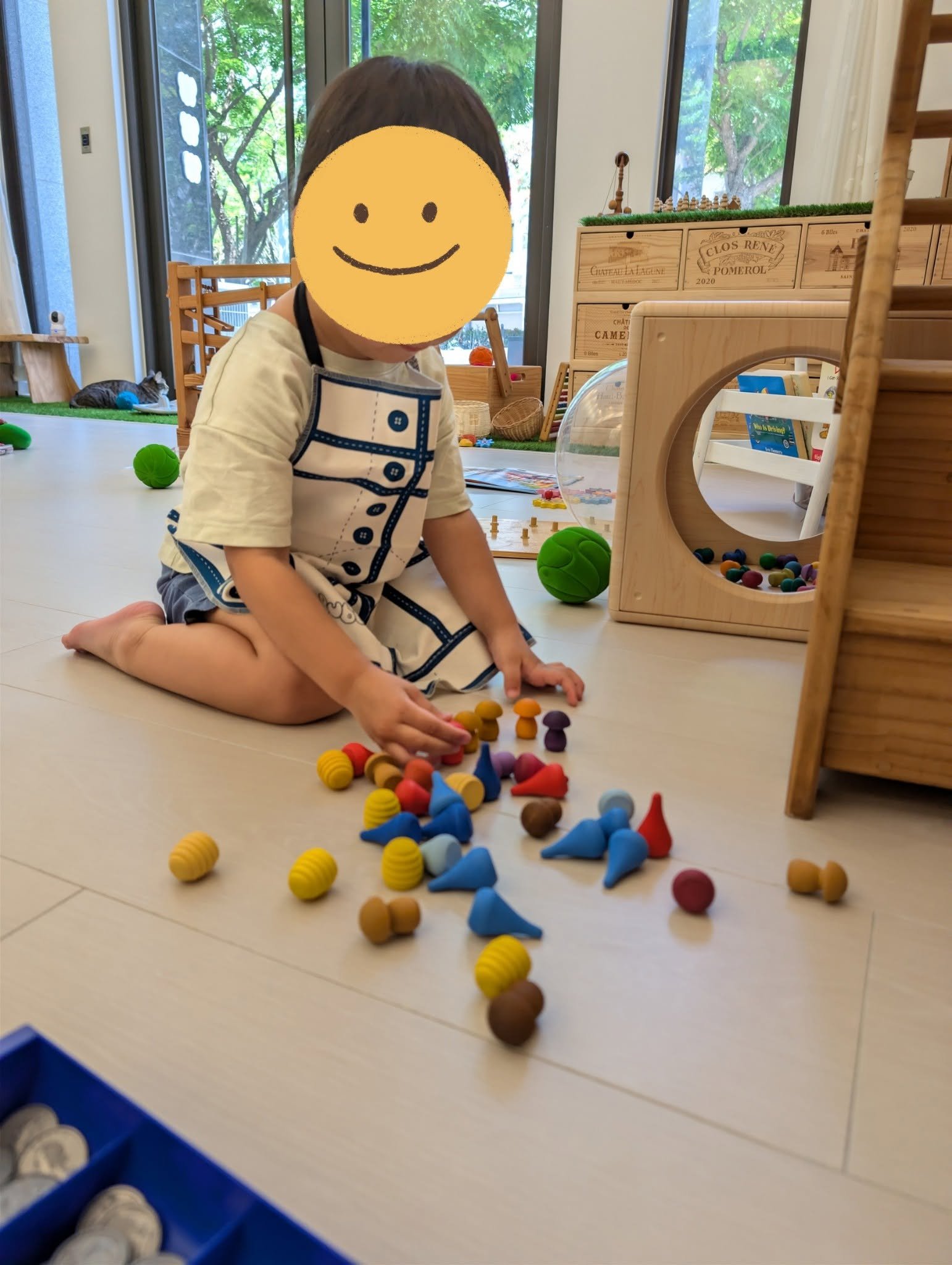
累積幾次來訪過程中的觀察,我看見這個孩子其實是很有「系統」的在玩。
她的遊戲主旨是用“動態的實驗”來了解物理還有物質的特性。
比起堆疊積木創造圖形,她比較喜歡嘗試用不同力道或角度來推推看、用球撞撞看,或跟不同的積木隨意組合成想像的道具,進入角色扮演遊戲。
她善用了整個空間,自己設定了各個區域的用途,佈置好喜歡的元件,就像在原野上蓋好了自己的小村落,不同的「點」具有不同的功能:
-需要上下爬動的瞭望基地台
-集中放置靜態遊戲的區域
-能動態測試玩具的遊戲區
-還設有私人寶藏區
而她會不斷的在這些點之間來來去去,重複的玩起她設置在那裡的遊戲,像是一個很忙的村長在巡訪。
她懂得串聯不同的玩具素材,創造符合她設想的遊戲內容,實現她想像世界裡的場景
她在想像中的小世界裡遨遊,滿足的嘗試、探險、發現,還有最重要的 — 感受😊。
每當她在遊戲的實驗中觀察到(學習到)物性的反饋時,她就會很開心。
遊戲結束的時候,她也收成了一籃子的了解(我懂了!我會了!原來可以這樣!我可以做到什麼!),而顯得心滿意足。
實境遊戲為孩子創造真實的五感體會,開放式玩具陪伴孩子盡情的想像與創造,角色扮演則是幼兒內化世界,學習技能的關鍵遊戲。
在遊戲過程中,
3 / 5我們觀察到孩子如何展現內在的豐盛以及完整😊
遊戲不一定是要跟別人一起玩,
遊戲是一種我們探索世界的方式,
盡情的與自己的想像力一起奔馳,
也是一種令人滿足的體驗。
每每看到孩子離開時心滿意足的笑容,
我們的內心也都感到很滿足😊
謝謝孩子送我們閃耀光芒的笑臉
期待我們下次的相見🌿
------
「獨自遊戲」(Solitary Play)
或「獨立遊戲」(Independent Play)
是用來形容孩子專注、投入在自己世界裡的遊戲行為。
這最早是由美國社會心理學家米爾德里德·帕登(Mildred Parten)在 1932 年提出的「兒童遊戲發展階段」理論。
根據這個經典理論,孩子的遊戲行為會隨著年齡和社交能力的成熟,經歷不同的發展階段。
4 / 5進行獨自遊戲的過程中,孩子往往正在展現高度專注力,待在舒服的心流狀態裡
將空間與寧靜留給她們,在遊戲區外圍靜靜地欣賞觀看(aka待命),就是最好的陪伴💞
5 / 5滑動或按鈕翻頁 | 點照片放大看圖說
The children who've visited lately each have their own style of play,
and give themselves fully to it—yet most still, in the course of playing, need a fair amount of interaction and company.
This visitor was a child of the *independent play* kind.
Before she even began, she had a clear direction in mind; her eye was keen;
she knew what she wanted to play, what she wanted to do—the idea and its content already in her head,
simply waiting to be met.
As the grown-ups, we really only needed to be quietly present—no need for much of a presence at all 😂.
From the very start she was absorbed in developing what she wanted to play, needing no guiding (or interrupting).
To introduce her to a toy, or nudge her toward a different way of playing,
you had to work to find a gap in her attention,
then find a way to "naturally" squeeze yourself in for about three seconds 🙋.
She was also the first child to use the *whole* space to play.
With each visit, she grew more composed in making full use of the props and the place.
On the surface, you might think she was just pulling out a heap of toys at random—
scattering them about, playing on a whim with no content, swapping one for the next.
In truth, what a child shows *dynamically* through play
often takes continuous watching to have any chance of catching.
Without the chance to follow that motion closely,
you might not link the real content in her actions, and see only heaps of scattered toys.
Watching across several visits, I saw that this child was, in fact, playing with real *system*.
The theme of her play was to understand the properties of physics and of matter through *dynamic experiment*.
Rather than stacking blocks to make shapes, she preferred to try pushing with different force or angle,
to knock things with a ball, or to combine blocks freely into imagined props and step into role-play.
She made good use of the whole space, set the purpose of each area herself, arranged the pieces she liked—
like building her own little village out on an open field, each "point" with its own function:
— a lookout base you had to climb up and down
— a zone for quieter, static play
— a play area for dynamically testing toys
— and even a private treasure spot.
She'd move, endlessly, between these points, replaying the games she'd set up there,
like a very busy village chief on her rounds.
She knew how to string different toys and materials together, creating the play she'd envisioned,
realising the scenes of her imagined world.
She roamed the little world in her mind, contentedly trying, adventuring, discovering—and, most of all, *feeling* 😊.
Each time her play-experiment let her observe (learn) how matter answered back, she was delighted.
When play ended, she'd harvested a whole basketful of understanding
(I get it! I can do it! So it works this way! Look what I can do!), and seemed thoroughly content.
Real-world play creates true, five-sense experience for a child;
open-ended toys keep a child company as they imagine and create to their heart's content;
and role-play is the key game by which a young child internalises the world and learns their skills.
In the course of her play,
we watched how a child shows her inner abundance and wholeness 😊.
Play doesn't always have to be with others.
Play is a way we explore the world,
running free alongside our own imagination—
and a satisfying experience in itself.
Each time we see a child leave with a contented smile,
our own hearts feel full, too 😊
Thank you, child, for the radiant smile you gave us.
We look forward to meeting again 🌿
🌿 A little note on child development 🌿
"Solitary Play," or "Independent Play,"
describes a child absorbed and immersed in a world of their own.
It was first proposed by the American social psychologist Mildred Parten, in 1932,
in her theory of the stages of children's play.
By this classic theory, a child's play moves through different stages as their age and social ability mature.
---
In solitary play, a child is often showing deep focus, resting in a comfortable state of flow.
Leaving them the space and the quiet, admiring quietly from the edge of the play area (aka on standby),
is the finest companionship of all 💞